Each year we run a series of visits to sites of interest for members. These include guided tours of historic towns and villages, museum visits and tours of archaeological excavations. Some of these are free of charge whilst others are paid-for events.
Recent visits included: a guided tour of Winchcombe by David Aldred, a walk around Uley, a behind the scenes tour of The Folk of Gloucester museum, a tour of Littledean Roman temple and visits to the Archaeoscan excavations at Guiting Power and Slimbridge.
If you would like to lead an evening walk around places of historic or archaeological interest in your home village or local area please contact Mike Milward at the m.milward1@yahoo.co.uk . He is always open to suggestions.
2026 programme
FORTHCOMING EVENTS
Guided Walk - Corinium Revisited
Saturday 5th September 14:00 – 16:00
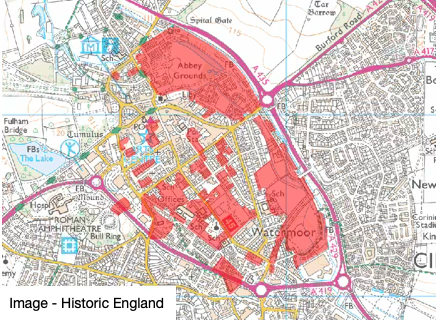
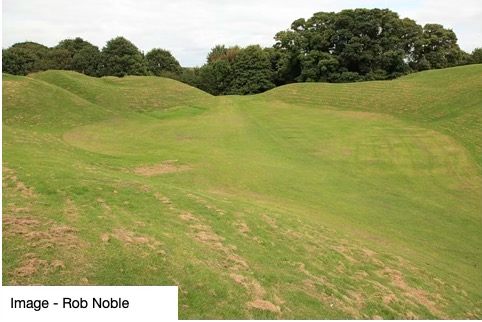
A two hour walk and talk with Neil Holbrook, Chief Executive of Cotswold Archaeology, about the Roman town of Corinium, the street grid plan of which, still lies beneath the modern streets.
We tour the four main town gates by retracing from the original central crossroads, the umbilicus urbis, or town navel where the cardo maximus crosses the decumanus maximus, the forum, basilica, macellum, the early fort, the vicus, the amphitheatre, the theatre, the baths, mosaicist workshops and defensive town walls.
Neil has researched, excavated and written a great deal on Roman Corinium, Roman villas and Gloucestershire’s ancient history and is a national authority on the subject as well as being a member of GlosArch.
All places on this event are currently taken. To be added to the waiting list for cancellations please email events@glosarch.org.uk .
Guided Tour - Museum of Gloucester (Sept TBA)
A guided tour of the museum for GlosArch members to include the discovery centre and some rarely seen ancient artefacts. The date for this will be announced soon.
REPORTS
M5 J10 improvement works - Site visit
Thursday 5th February
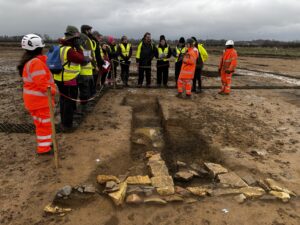
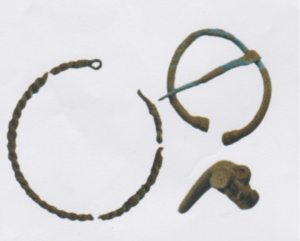
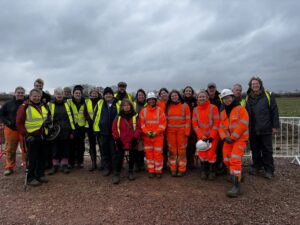
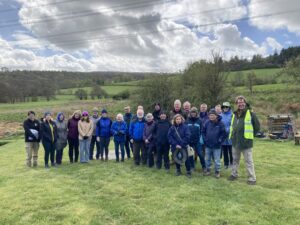
This year the “Summer” visits programme started early, with a guided walk in February, led by staff of Archeological Research Services, of the archaeological investigations at the site of the new, southbound road connection to the M5 from the A4019 at Junction 10 outside Cheltenham. The ARS team walked us around the muddy site to show us the main features they have found so far, including Roman burials, a corn drier and Iron Age ditches. Afterwards we were shown some of their key finds, including a copper bracelet, brooches and coins. Thank you to Alice Short and the team from ARS for showing us around.
Withington Romano-British Villa
Saturday 11th April
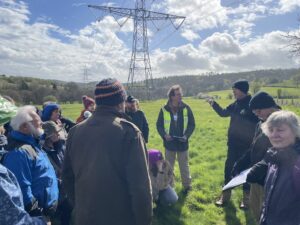
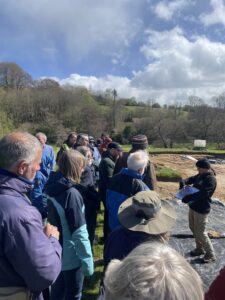
On a bright, if blustery, April morning Simon Greenslade and his team from The Halewell Archaeology Project took 26 GlosArch members on a tour of the excavations they are undertaking in a quiet valley outside Withington, Gloucestershire. They are excavating a large Roman villa, which turns out to be the one described by Samuel Lysons in 1811. The Orpheus mosaic he discovered is now in the British Museum. In 2006, Time Team also excavated a villa in a field adjacent to the current dig and decided it was Lysons’ villa. However, evidence from the the current excavation indicates that this one is the villa excavated in 1811. It is a sizeable residence with some surviving mosaics, a bath house and several phases of building. Work is still on-going.
Summer Coach Trip to Avebury and Marlborough
Saturday 4th July 2026
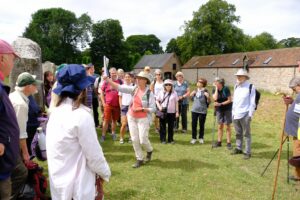
After arriving in Avebury and assembling at the barn, we met Dr Nick Snashall, who, after a short introduction by David, took us into the wondrous mystery of this massive henge; every bit as impressive as Maiden Castle, but with what were originally near vertical sides into 9 metre deep ditches.
The enormous stones, some weighing in excess of 50 tonnes, were erected to perhaps represent male and female forms, placed in circles with massive entrances for reasons long lost to us probably since before Roman times. Next we walked between the stones of the strange meandering Avenue, of different shapes and sizes, until we reached a boundary after which the stones have gone, having been robbed out over time. We now turned to the west and slowly climbed Waden Hill, which was quite a climb, but becomes well worth the effort because of the tremendous landscape views of Silbury Hill, the West Kennet Barrow and Swallowhead Springs, it affords to the south of the A4.
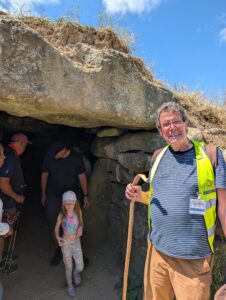
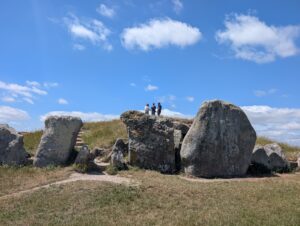
From this viewpoint all was so vividly described by Dr Snashall that slowly the whole monumental landscape began to be unveiled before us. From Windmill Hill, north of Avebury, south as far as Larkhill, Durrington Walls and Stonehenge, 26 miles south, the landscape is full of Neolithic, or earlier, monuments to some forgotten revered leader, deity or supernatural spirit all now lost to our understanding. Dr Snashall didn’t stop, except to drink, her enthusiasm and knowledge held us transfixed. Once back on the coach exhilarated, hot and exhausted, we all agreed to skip the Sanctuary to go back to Avebury for a break and refreshments. But, luckily the coach driver gave us the chance to view the Sanctuary and barrows from our seats on the way to Marlborough and home.
Santiago Molina/David Jones
Summer 2025 programme
CRICKLEY HILL - REVISITED Friday 1st August at 6pm
Crickley Hill – Revisited
The earliest evidence of human activity on Crickley Hill dates back to the early Neolithic, around 6,000 years ago, when it was the site of one of the most important causewayed enclosures in the country. Later in the Neolithic around 2500BC, saw the building of cairns and a long mound on the promontory. After the abandonment of the Neolithic site, Crickley may have lain deserted for more than a thousand years. In the Iron Age, from about 700 BC onwards, a hillfort was built on Crickley Hill. This survived for around 100 years before being destroyed. The defences were reinforced and the site resettled around 500BC, but this too was abandoned. The site has seen farming, battles, sacred worship, tribal gatherings and settlements.
GlosArch have a long association with Crickley Hill going back to the time of Director of Excavations, Professor Philip Dixon MA D.Phil FSA FRHS. We are delighted that Professor Dixon has agreed to lead our walk around this important Neolithic and Iron Age site.
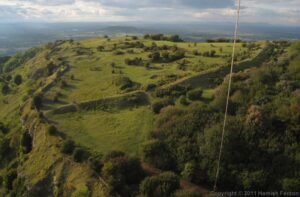
This evening walk is free to attend, but there will be a collection at the end of the evening towards the costs of running this event.
Meet at the Crickley Hill Country Park car park GL4 8JY.
What3Words location: ///abundance.crowns.washable
Saturday 10th May All Day Coach Trip
Rollright Stones at Long Compton, Oxon/Warks.
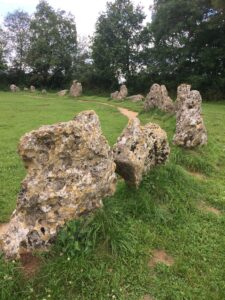
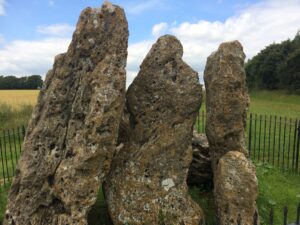
An ancient complex of megalithic monuments with three main elements, The King’s Men stone circle, the King Stone, and the Whispering Knights dolmen. The dolmen is the oldest, dating to the early Neolithic, circa 3,800-3,500 BC. The King’s Men stone circle was erected in the late Neolithic, circa 2,500 BC; whilst the King Stone dates to the early to middle Bronze Age, circa 1,500 BC. All are made from natural Jurassic oolitic limestone, which forms the bulk of the Cotswold hills. Used for millennia as a sacred site, the stones are a great source of myths and legends. The site is managed by the Rollright Trust.
— Plus
Roman Villa at North Leigh, Witney, Oxfordshire.
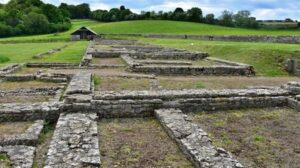
This courtyard villa, managed by English Heritage, is one of the larger villas of Roman Britain. It was at its most extensive in the early 4th century, when it included three bath suites, at least 19 mosaic floors and 11 rooms with underfloor heating. The most important feature of the site is a fine mosaic tile floor dating to the early 4th century.
The visit will include a guided tour with an English Heritage guide and a talk on the relationship of the villa to Akeman Street by Dr Tim Copeland.
— Plus
Tea & cake in Witney
From North Leigh we will travel to the historic town of Witney where we will be free to explore and grab a bite to eat or drink.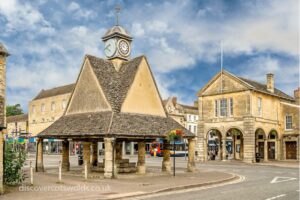
Coach trip £32 per person starting at 8:15am from the Oxtails campus of Gloucester University and picking up at 9.00am from Cheltenham Racecourse park and ride. Although both venues are admission free, if we have guides, we will be expected to make donations, which are included in the ticket price. To book a place please email David Jones at: garstanforddasilva@gmail.com (if you have already expressed an interest in this visit you will be contacted to confirm and pay). This trip is open to non-members.
Thursday 10th July. 7pm Walk on Churchdown Hill
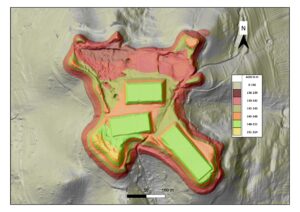
Michael Hare, Mike Joy and Phil Cox will lead an evening visit to Churchdown Hill. Michael Hare will explain the geology of the hill and how it relates to the siting of the church before Phil takes us to the earthworks surrounding the top of the hill, thought to date to the Iron Age and likely enclosing a small hillfort. This will be followed by a visit to St Bartholomew’s church, which has its origins in the 12th century, led by Mike Joy and Michael Hare.
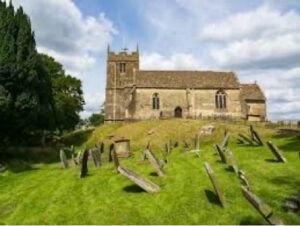
 Meet at the St Bartholomew’s Church car park at 18:30 – Free to members. Post code GL3 2LG. What3Words location: ///nature.record.rats
Visit to Withington Roman Villa - Date TBC
We will be taken on a guided tour of the recent excavations by archaeologist Simon Greenslade. This site comprises two Romano-British building complexes surviving as buried masonry, with associated field boundaries and trackways, situated on a limestone plateau. The first villa was excavated in 1811 by Samuel Lyons and again in 2006. At this time geophysical survey showed the second even larger building complex nearby which was also excavated. Simon Greenslade is leading the latest excavation of the site.
September/October. Date and time TBC depending on ongoing work.